Does Countertop RO Remove PFAS (2026): What the Evidence Says

Yes — reverse osmosis is one of the treatment technologies the EPA itself cites for reducing PFAS in drinking water, and a countertop RO is real RO.

 ByZulqarnain
Yes — reverse osmosis is one of the treatment technologies the EPA itself cites for reducing PFAS in drinking water, and a countertop RO is real RO.
 ByZulqarnain
Yes — countertop RO removes chlorine, and it does so in the carbon pre-filter, before the water ever reaches the membrane. The membrane gets the credit by.
 ByZulqarnain
Yes — AquaTru’s RO stage removes lead, and AquaTru lists lead reduction among the certified claims for its countertop systems (IAPMO certification.
 ByZulqarnain
Yes — reverse osmosis removes the dissolved minerals in your water (calcium, magnesium, potassium, sodium) along with the contaminants, because the membrane.
 ByZulqarnain
AquaTru removes fluoride because its third stage is a reverse osmosis membrane, and fluoride rejection is basic membrane physics — AquaTru lists fluoride.
 ByZulqarnain
Budget roughly $350–375 for the machine, then about $130–170 a year in filters at manufacturer list prices — around $155 a year on a steady annualized.
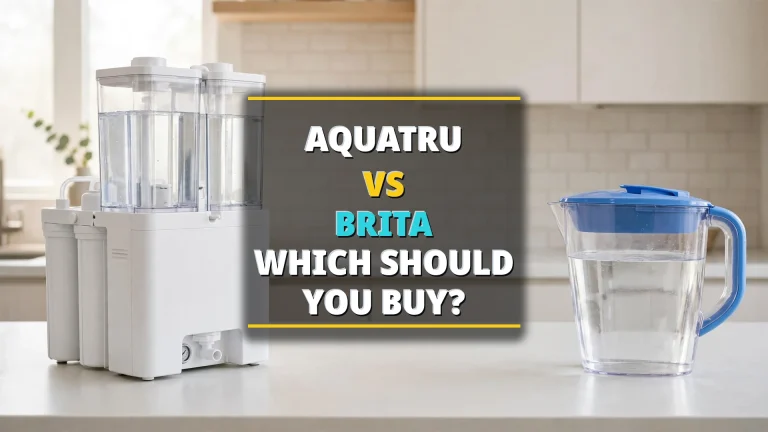 ByZulqarnain
Your tap water carries that faint swimming-pool note of chlorine — or your water report flags something heavier, like lead in old plumbing or fluoride you.
 ByZulqarnain
You open the clean-water tank and the water looks cloudy. Or the unit quit right after you refilled it — nothing broken.
 ByZulqarnain
Your tap water has that faint swimming-pool taste, and you have finally decided to do something about it. Then the real confusion starts: the internet tells.
 ByZulqarnain
The filtration itself is basically the same — both use the same RO technology, and published comparisons put both around 90–99% removal of common dissolved.
End of content
End of content